
Discover the magnificent ruins of Polonnaruwa, the medieval capital of Sri Lanka. This UNESCO World Heritage Site offers a captivating journey back to a golden age of Sinhalese civilization, showcasing incredible architecture, advanced irrigation, and stunning rock carvings. Polonnaruwa is an essential stop in the Cultural Triangle and a highlight of any Sri Lanka itinerary.
Ancient City of Polonnaruwa: A Glimpse into History
Polonnaruwa served as the second capital of Sri Lanka, flourishing between the 11th and 13th centuries, following the destruction of the Anuradhapura Kingdom. The city’s golden age was ushered in by the reigns of great kings like Parakramabahu I and Nissanka Malla, who oversaw the construction of monumental palaces, ornate temples, and a complex network of reservoirs. The ruins vividly illustrate the fusion of Sinhalese Buddhist tradition and South Indian Hindu influences, a legacy of the Chola invaders who initially established the city as a military base. Today, the archaeological park is remarkably well-preserved, making it one of the best places to witness the grandeur of ancient Sri Lanka.Polonnaruwa Attractions: Must-See Highlights
Exploring the vast ancient city is an adventure, often best done by bicycle (available for rent nearby). The main ruins are divided into three core sections: The Citadel, the Quadrangle, and the Northern Sector.The Sacred Quadrangle (Dalada Maluwa)
This concentrated area of monuments is the religious heart of the ancient city and houses some of Polonnaruwa’s most spectacular ruins.- Vatadage: A beautifully preserved circular relic house, notable for its four entrances, intricate stone carvings, and well-maintained moonstones and guardstones.
- Hatadage: Built by King Nissanka Malla, this structure was constructed to house the Sacred Tooth Relic of the Buddha.
- Nissanka Lata Mandapaya: A unique structure with stone pillars carved to resemble lotus stalks, built for the purpose of chanting Pirith (Buddhist protective verses).
The Royal Citadel
The administrative and royal center of the kingdom, the Citadel contains the remains of the royal residences and administrative buildings.- Royal Palace of King Parakramabahu I: Though only the massive brick walls and foundation remain, the ruins hint at a colossal structure once believed to have been seven stories high with a thousand rooms.
- King’s Council Chamber (Audience Hall): Distinguished by its impressive stairway flanked by lions and a frieze of elephants carving along the base.
- Kumara Pokuna (Royal Baths): The king’s elaborate bathing pool.
The Northern Sector
Heading north from the Quadrangle, you encounter some of the largest and most spiritually significant Buddhist sites.- Gal Vihara: A rock-cut temple featuring four magnificent Buddha statues carved from a single large slab of granite. These include a seated figure, a standing figure, and a colossal 14-meter-long reclining Buddha, considered masterpieces of Sinhalese rock carving.
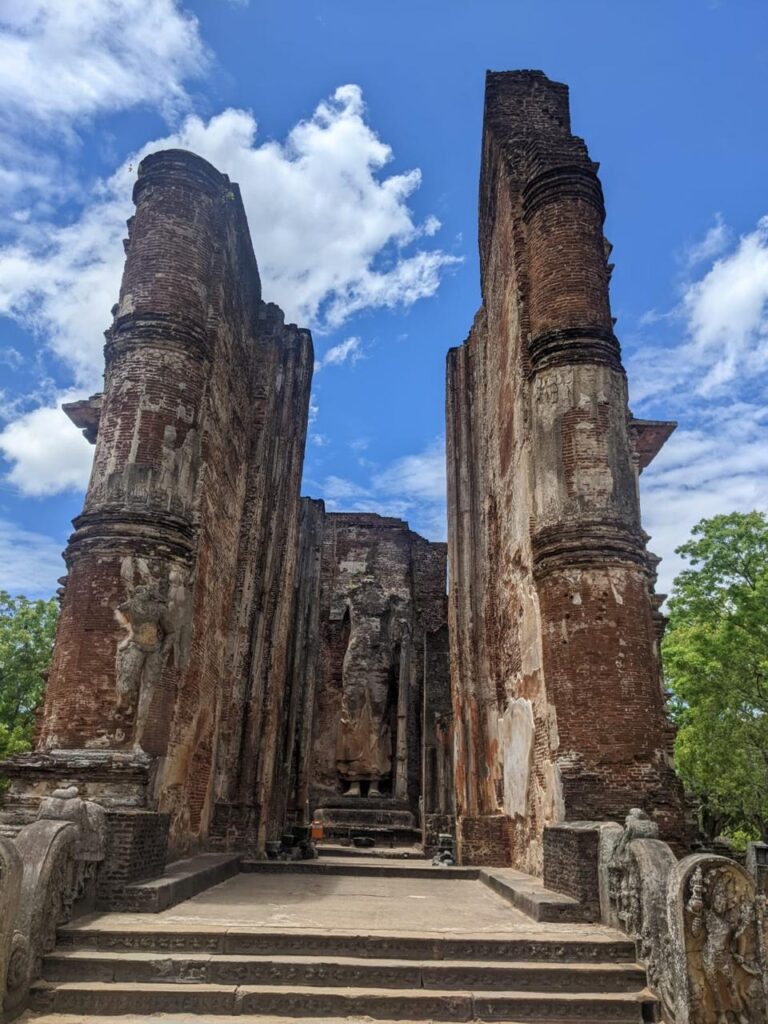
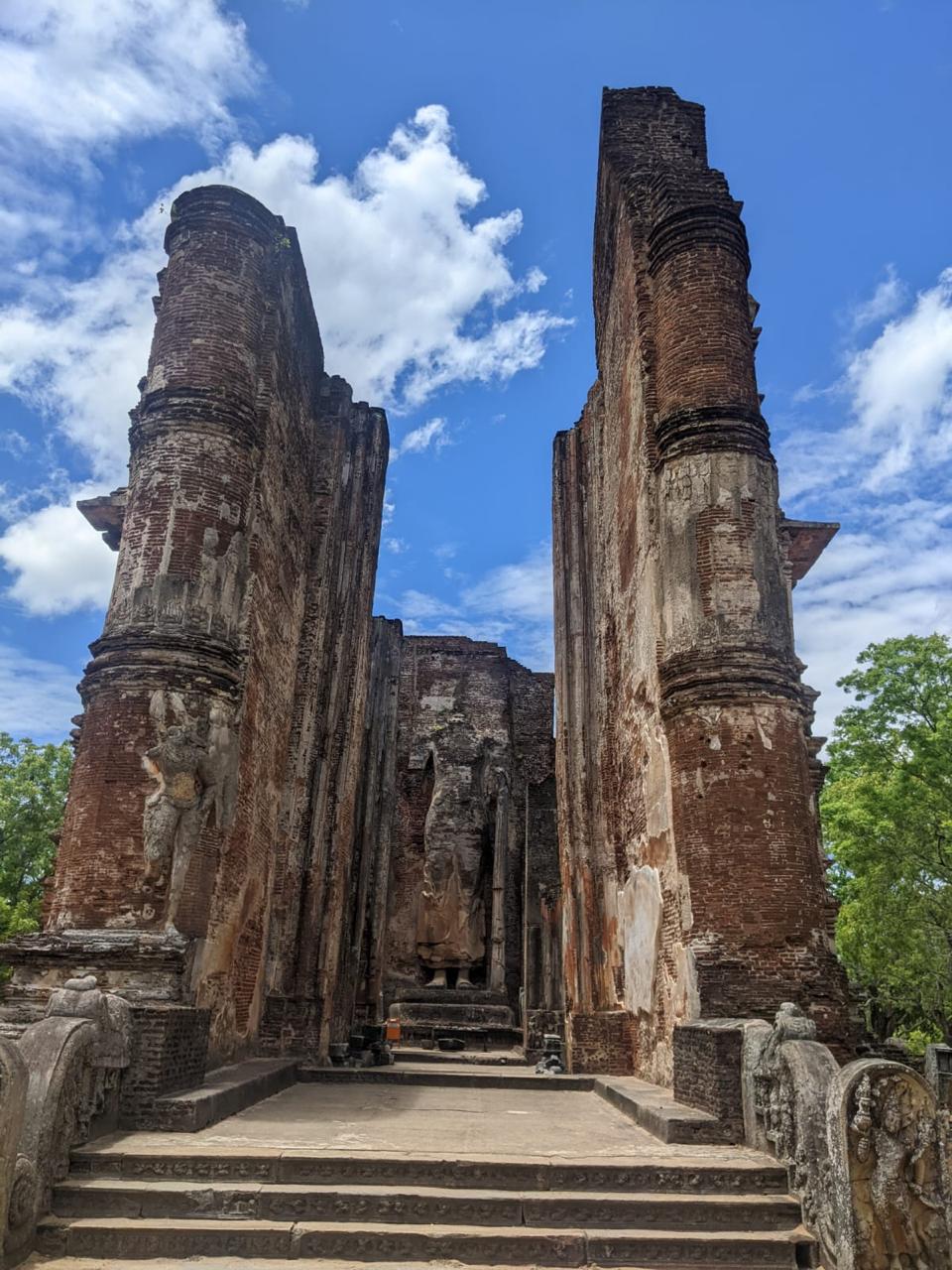
- Lankatilaka Image House: An awe-inspiring brick structure with towering walls and a colossal headless standing Buddha statue within. The scale is truly monumental.
- Kiri Vehera: A well-preserved stupa (dagaba) that retains its original lime plaster, earning it the name “Milk-white Stupa.”
- Rankoth Vehera: The largest stupa in Polonnaruwa, built entirely of brick, reflecting the style of the earlier Anuradhapura era.
Parakrama Samudra: The Sea of Parakrama
No visit to Polonnaruwa is complete without seeing the Parakrama Samudra (Sea of Parakrama). This massive ancient reservoir, constructed by King Parakramabahu I, is a testament to the unparalleled hydraulic engineering of the ancient Sinhalese. The king’s motto, “Let not even a drop of water that falls on the land, go to the sea without benefitting man,” led to this enormous tank that still provides water for irrigation today, transforming the region into a fertile agricultural hub.23Polonnaruwa Wildlife: Meet the Monkeys
The ancient city is also a haven for wildlife. Most notably, the ruins are home to a large population of Toque Macaques, a species of Old World monkey endemic to Sri Lanka. These playful primates, famed from the documentary Monkey Kingdom, are a constant and entertaining presence among the old stones and trees.Best Time to Visit Polonnaruwa Sri Lanka
The ideal time to visit Polonnaruwa is during the dry season, which generally runs from May to September. This period offers warm, sunny weather with less chance of rain, making it perfect for exploring the open-air sites. Alternatively, the period from December to March is also good, offering slightly cooler mornings.- Tip: Avoid April and early May, as temperatures can be extremely high. Always start your visit early in the morning to beat the midday heat.